
The 94-to-33 Gap in AI at Work
New Anthropic research: some 94 percent of tasks in computing roles are theoretically within reach of the model, while real usage covers 33. What the gap holds.
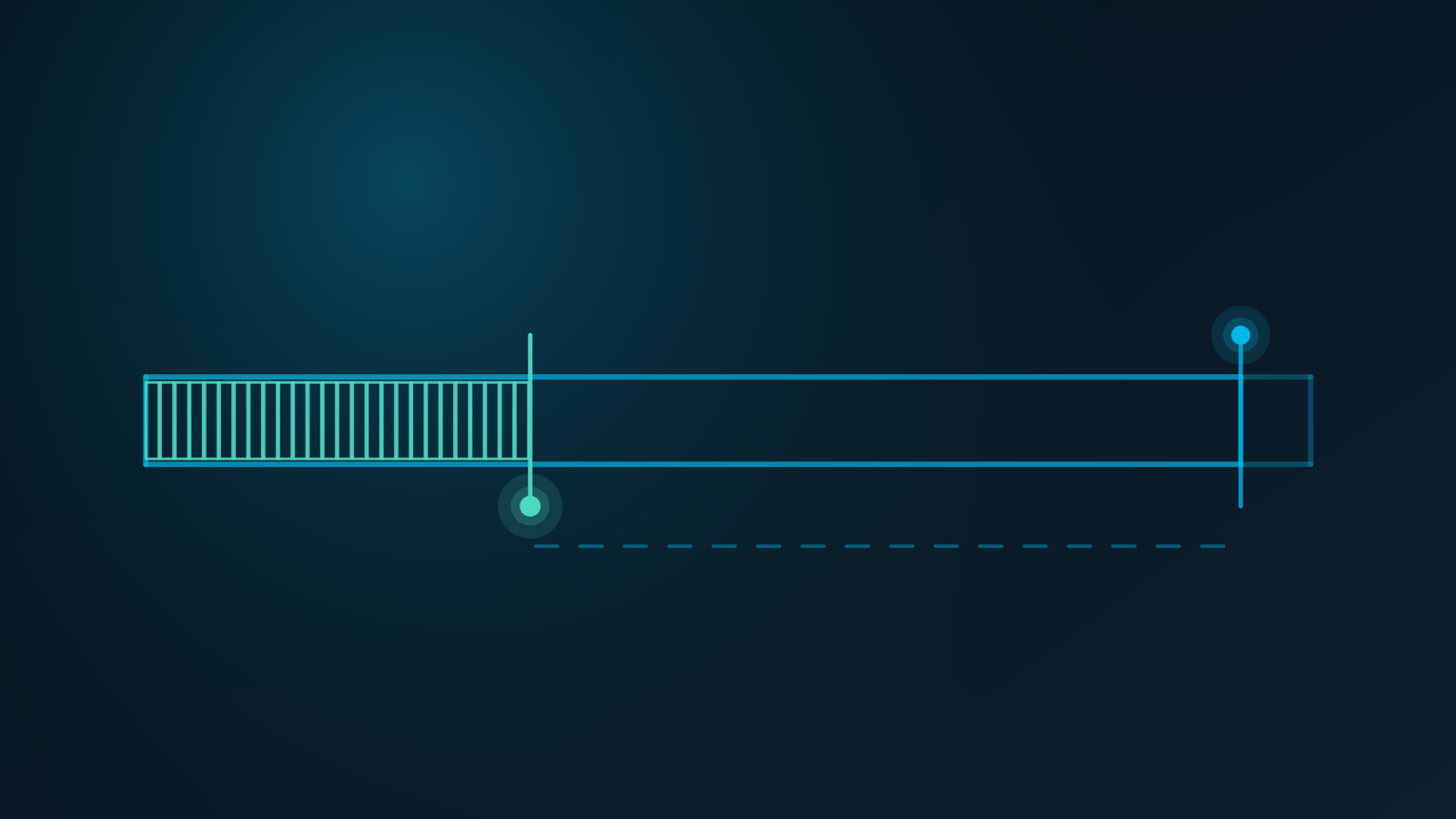
New research from Anthropic, the company behind Claude, puts a number on something that reframes most of the discussion about AI and work: the distance between what the technology can do and what it actually does is far larger than assumed.
The short answer
In its report on the labour-market impacts of AI, Anthropic finds that within Computer and Mathematical occupations roughly 94 percent of tasks are theoretically within reach of the model, while observed usage covers only about 33 percent. The constraint facing organisations today is not capability. It is the gap between capability and application.
A measure of tasks, not of jobs
The methodological move here is simple and important: instead of asking which occupations are exposed, the study measures tasks, and calls the result "observed exposure" — theoretical model capability combined with real usage data.
Do not skip past that distinction. No job is a single undivided thing; every job is a bundle of dozens of different tasks. Measured at task level, "will this job be replaced?" becomes "which part of this work changes first?" — and the second question is one you can plan against.
The figures the report gives
From the same research:
- Computer programmers show the highest coverage, around 75 percent
- Data entry keyers, around 67 percent
- Customer service representatives also rank high
- Meanwhile about 30 percent of workers have zero exposure — cooks, motorcycle mechanics, bartenders
The pattern is clear. Work whose output is text, data or images changes first; work that requires hands, physical presence and equipment has barely moved.
What it says about employment, and what it does not
This part deserves careful reading. The research reports no systematic increase in unemployment among highly exposed workers since late 2022. The common picture of broad displacement is not what the data shows.
One subtler signal is reported: among workers aged 22 to 25 entering highly exposed occupations, the job finding rate fell by roughly 14 percent. What has shifted is the route into work rather than existing employment itself.
Two things matter for reading these numbers correctly. The data comes from the United States Current Population Survey from August 2022 onward. And the measure is deliberately conservative — fully automated use receives full weight while augmentative use receives half. We take that distinction apart separately in automation or augmentation.
Why 94-to-33 is the most useful number in the report
If the technology can cover 94 percent and in practice covers 33, that 61-point space holds three things: missing data, processes never redesigned around the tool, and missing skills in the team.
None of the three is solved by buying a better model. It is the same conclusion other management research reaches, covered in why an AI budget does not turn into profit.
For an organisation the practical meaning is this: the competition is no longer about access to the technology — everyone has access — but about how fast that gap closes.
What it means for an organisation in Karaj
Organisations in Karaj and Alborz province — factories, training centres, service businesses — usually hold a mix of both kinds of work: part documents and data, part physical presence and equipment.
Our practical advice is to write out one unit's list of tasks and test each with a single question: is the output of this task text and data, or something physical? That one split tells you more about where to start than any global report.
Our team runs this session on site, at Alborz Science and Technology Park or at the organisation's own premises, because the real task list is written in no job description — it lives with the person doing the work.
Frequently asked questions
What exactly is "observed exposure"?
A measure combining the model's theoretical capability with real usage data. Unlike earlier measures it does not only ask what the technology could do; it measures what it actually does.
Does this mean programming jobs are disappearing?
The research does not say that. It says task coverage in that group is high, and simultaneously that no systematic increase in unemployment among highly exposed workers has appeared. Task coverage and job elimination are not the same thing.
Why is real usage so far below theoretical capability?
Three usual reasons: organisational data is not in a usable state, the process was never redesigned around the tool, and the team lacks the skill to apply it. All three are solvable and none requires a better model.
Do these figures apply outside the United States?
Not directly — the data is from the US labour market. What transfers is the pattern rather than the number: text and data work changes first, and the gap between capability and application exists everywhere.
How do we find which of our tasks fall into this group?
Start from the output of the work, not the job title. Any task whose output is a document, a report, a message or a data classification is the first candidate. The practical guide is in preparing a team for work that changes.
Should we wait for better models?
On this report's own evidence, model capability is not the binding constraint — real usage sits at a third of what is already available. An organisation that closes its gap now will benefit more from the next generation too.
Related services from Qatreh
- AI consulting — identifying transferable tasks and the roadmap
- Enterprise training — in-house programmes built on your own processes
- AI training courses — practical training for technical teams
- AI process automation — automating repetitive tasks
- Persian enterprise chatbot — answers grounded in your own knowledge
- Computer vision — turning camera frames into numbers
- Data science — forecasting and decision dashboards
- Robotics — educational, service and industrial
- AI in Karaj — every service, delivered on site in Karaj and Alborz