
Robotics in Elderly Care: What Actually Works
A meta-analysis of nineteen studies shows social robots reduce loneliness. Which function is used most, and the four conditions that decide whether it succeeds.
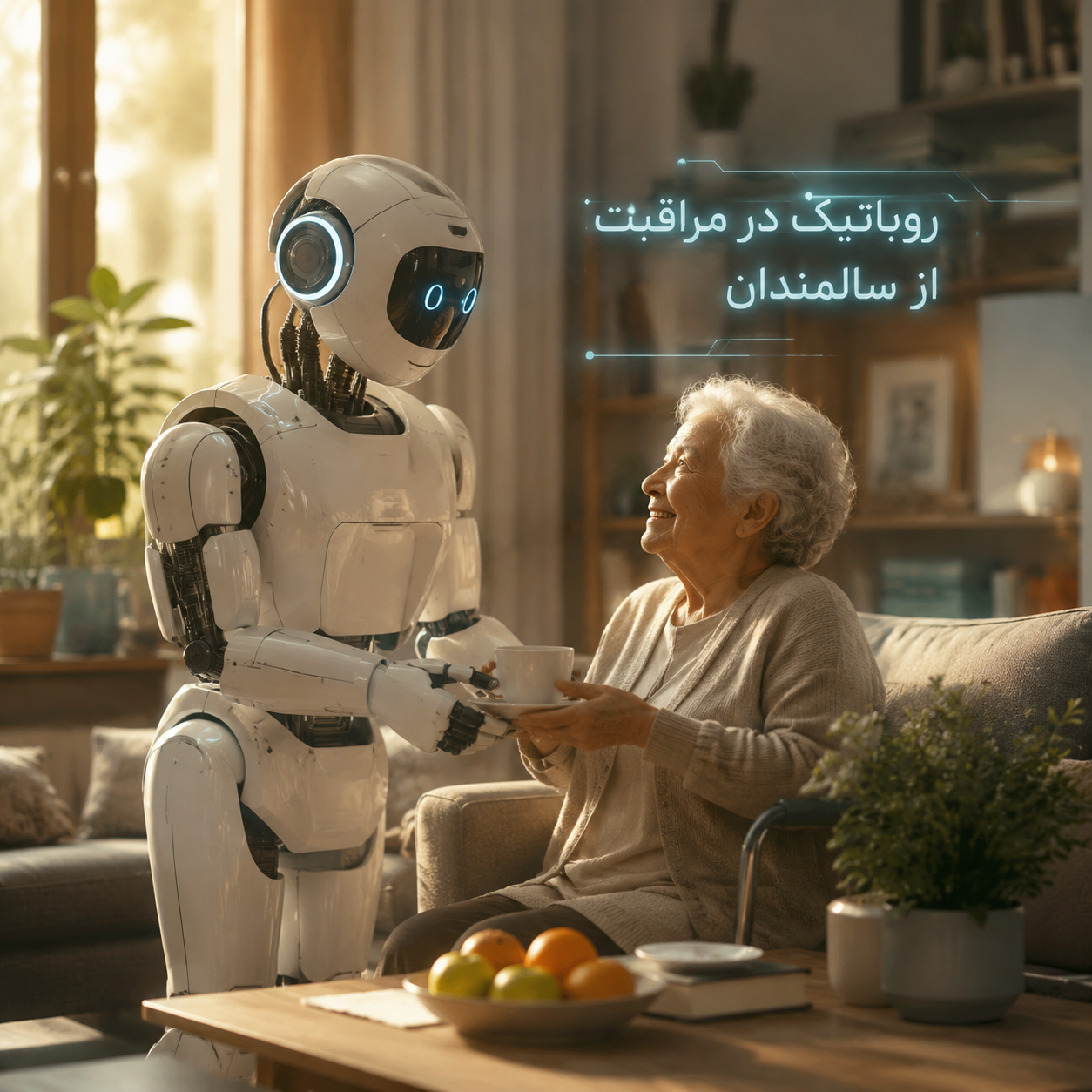
A meta-analysis of nineteen studies found that social robots reduce loneliness in older adults with an effect size of −0.59 — a moderate-to-strong effect by the standards of behavioural research.
A second figure is just as notable: acceptance among older adults runs between 70 and 80 percent, considerably higher than most people assume.
But those numbers come with a condition stated plainly in the same research, and ignoring it is why many deployments fail.
The market and what is actually deployed
The eldercare robot market reached 3.56 billion dollars in 2026, growing at 12.5 percent a year. This is no longer laboratory technology:
- Robots such as Paro, ElliQ and Hyodol operate in care homes and private residences across Japan, South Korea, China, the United States and Europe.
- China opened the first smart wellness robot eldercare station.
- In March 2026, Andromeda Robotics raised seventeen million dollars to launch its Abi robot into US senior care.
The most-used function is not the one people picture
The popular image of a care robot is physical assistance — lifting, transferring, bathing. Real deployment data says otherwise:
- Entertainment: 84 percent — games, photographs, singing, reading stories and news
- Companionship: 66 percent — emotional comfort and reducing isolation
- Edutainment: 55 percent — activities that are also mental exercise
The value sits in presence and interaction, not mechanical strength. That is good news, because interactive functions are far simpler and cheaper to deliver than physical assistance.
Four conditions that decide the outcome
The research identifies four success factors. All four are organisational rather than technical:
Gradual introduction. A robot that appears suddenly in an older person's living space gets rejected. Phased familiarisation multiplies acceptance.
Caregiver involvement. Without the nurse or family in the process, the robot becomes an abandoned device. The caregiver needs to know what it can and cannot do.
Meaningful function. A robot that only says hello is set aside within a week. It has to do something whose absence would be noticed — a medication reminder, a call to family, a daily mental exercise.
A simple interface. Every step that requires learning excludes a portion of the users.
Applying this locally
Alborz province has residential care facilities and a home-care network. A realistic starting point:
Begin with companionship and reminders, not physical assistance. Simpler, cheaper, and — according to the data — where the effect actually is.
One facility, one small group. Ten to fifteen residents, introduced gradually over several weeks.
Define the measure before starting. A standard loneliness scale before and after, daily interaction counts, and caregiver assessments.
Involve the staff from day one. This is the factor repeated in every study and the one most often skipped.
Frequently asked questions
Does a robot replace a human carer?
No, and the research makes no such claim. The dominant functions are entertainment and companionship — filling hours when a human carer cannot be present. Caregiver involvement is itself one of the success conditions, not something removed.
Do older adults actually engage with robots?
The data shows 70 to 80 percent acceptance, conditional on gradual introduction and a simple interface. Initial resistance is normal and usually fades within a few weeks.
Which function should we start with?
Companionship and medication reminders. Global deployment data shows these have the highest use and the lowest technical complexity, while physical assistance is the most expensive and least used.
How long before an effect is visible?
Studies typically measure over eight to twelve weeks. The condition is that the starting state was recorded on a standard scale before the deployment began.
The short version
The key finding in one sentence: the value of a care robot lies in presence and interaction, not mechanical capability. A project that begins with simple functions is both cheaper and, on the evidence, more effective.
And as with any project, measuring the starting state is the precondition. Without it, no improvement can be demonstrated.
The same narrow-scope-and-metric logic has proved decisive in other domains; AI in financial institutions and AI traffic management follow the same pattern.
Related services from Qatreh
Qatreh is based at the Alborz Science and Technology Park in Karaj and works with organisations across:
- Computer vision and robotics — image processing, state detection and monitoring systems
- AI automation and chatbots — reminders, response handling and voice interaction
- AI consulting for business — pilot design and choosing the measurement metric
- AI training courses and AI consulting for education — training facility staff
- Data science — interaction data analysis and effectiveness measurement
If you work in elderly care and want to know where to begin, talk to us.
Sources
- Meta-analysis of nineteen studies on social robots and loneliness in older adults
- Assistive robotic systems in nursing care: a scoping review — NCBI
- Socially assistive robots' deployment in healthcare settings: a global perspective — arXiv
- Eldercare robot market reports, 2026