
Educational Robotics in Schools: Where to Begin
Research shows the teacher matters more than the equipment. A five-step plan for a school starting this year, and how to measure whether the programme worked.
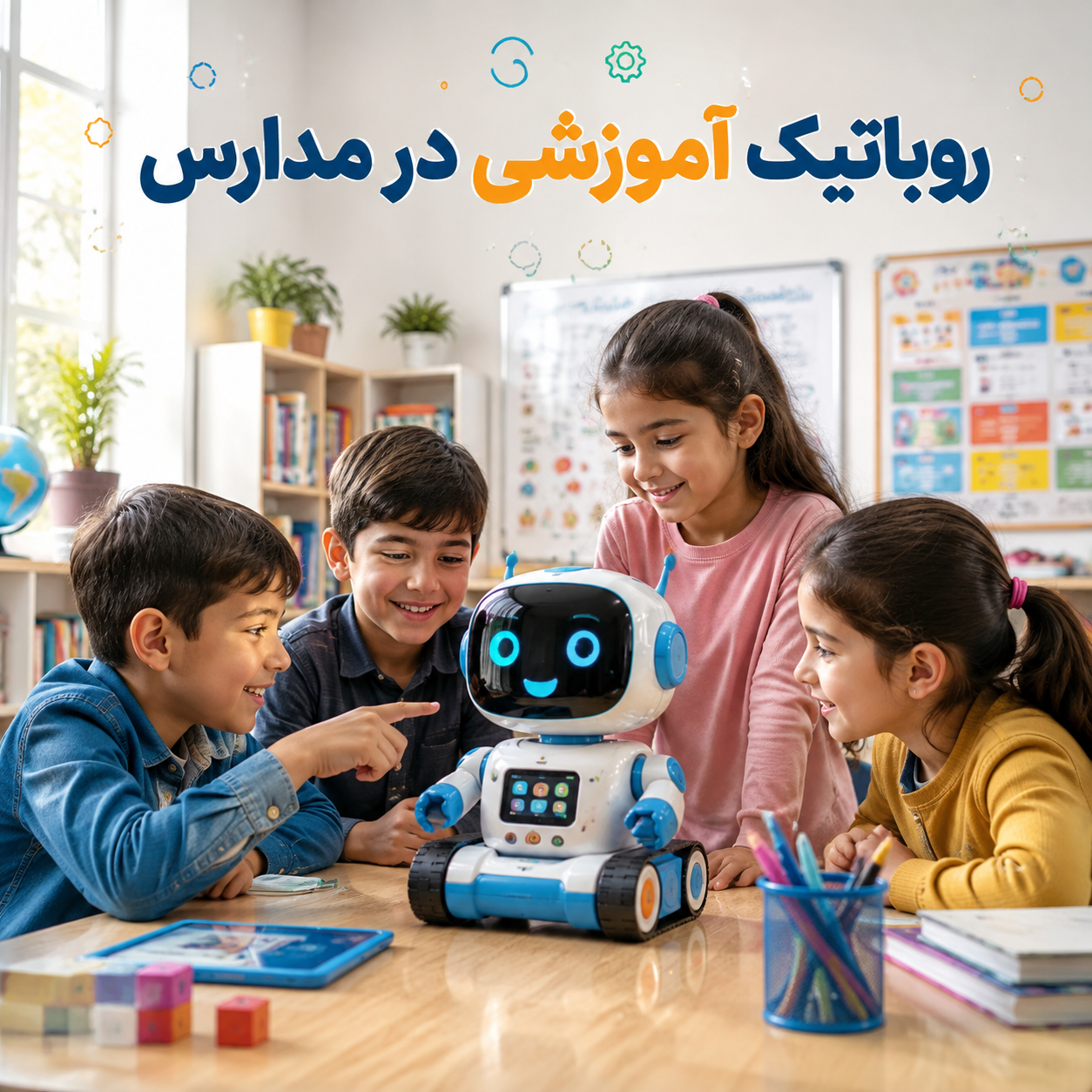
As a new school year approaches, many schools decide whether to add robotics to their programme. Recent research gives a clear picture of what actually works — and what ends up as expensive equipment in a cupboard.
What the research shows
Studies of robot-based education record improvement in several specific areas:
- Reflective thinking in problem-solving and spatial visualisation among primary pupils
- Attitude and satisfaction towards science and mathematics
- Problem-solving skills and teamwork
- Concept retention compared with purely theoretical instruction
The important detail is that the largest effect appears in attitude, not necessarily in marks. Robotics builds interest more than it transfers knowledge — and interest is what makes long-term learning possible.
What changed by 2026
Until a few years ago computational thinking was an add-on. In current curricula it is a staple: pupils meet logic, problem decomposition and autonomous systems from primary grades onward.
That reorientation matters for a school starting out. Robotics is no longer an extracurricular activity sitting beside the syllabus; it is a way of teaching concepts already in it.
The common failure pattern
Evaluation studies repeatedly show one pattern: the school buys equipment and the equipment stays in storage.
The cause is almost never the equipment. There are three real reasons:
An untrained teacher. A teacher who is not comfortable with the tool will not use it. This single factor has the greatest influence and receives the least budget.
No link to the syllabus. If the robotics activity is not tied to what is being taught that week, it becomes extra time — and extra time is the first thing dropped under calendar pressure.
No measurement. Without a before-and-after, nobody can show the programme worked, so next year's budget is not renewed.
A starting plan for a school
One: begin with a single year group
One year group, ideally where you have an interested teacher. Expanding after a visible result is far easier than retreating from a failed programme.
Two: prepare the teacher before buying equipment
The order matters and is usually reversed. A training course for the teacher, before the equipment arrives, is the difference between an active programme and a sealed box.
Three: tie the activity to that week's lesson
If this week's topic is angles, the robotics activity should be about rotation and angles. That link turns robotics from "extra work" into "another way to teach the same lesson".
Four: record the starting state
Before you begin, record pupils' attitudes to science and mathematics with a short questionnaire. Measure again at the end. That is the only way to justify continuing the budget.
Five: support after the course
Teachers generate questions after the first term, not before it. Having a consultant available in the early months raises the programme's survival rate noticeably.
Frequently asked questions
What age can start?
Research records improvements in reflective thinking and spatial visualisation from primary level. The tool must suit the age, but the underlying idea — giving a machine an instruction and seeing the result — is graspable young.
Does starting require a large budget?
No, and a large start is not even advisable. One year group, one trained teacher and a limited set of equipment is the pattern with the best survival odds. Money spent on training the teacher returns more than money spent on additional devices.
Do pupils need to know programming?
No. Today's educational tools use visual programming — dragging and dropping blocks rather than writing code. The concepts of logic and sequence transfer without programming syntax getting in the way.
How do we know it worked?
By measuring before and after. The simplest method is a short questionnaire on attitudes to science and mathematics, plus the teacher's observation of class participation. That is where the research records the largest effect.
The short version
What the research makes clear is that the success of educational robotics depends far more on the teacher and the curriculum link than on the equipment.
For a school starting this year, the right order is: one year group, a trained teacher before purchase, a link to the weekly lesson, and measurement before and after.
The same principle — that internal capability matters more than the tool — recurs in organisational projects; we cover it in AI traffic management and AI governance in financial institutions.
Related services from Qatreh
Qatreh is based at the Alborz Science and Technology Park in Karaj and works with organisations across:
- AI training courses and AI consulting for education — course design for teachers and educational institutions
- Computer vision and robotics — practical projects and interactive systems
- AI consulting for business — programme design and defining the measurement metric
- AI automation and educational chatbots
- Data science — learning data analysis and progress measurement
If you run a school or educational organisation and want to start this year, talk to us.
Sources
- Global effects of robot-based education on academic achievement, computation, motivation and performance — Nature, Humanities and Social Sciences Communications
- Assessing and benchmarking learning outcomes of robotics education — ERIC
- The role of robotics in STEM education: developments, challenges and opportunities — Springer
- STEM education trend reports, 2026